Showing posts with label #extinct. Show all posts

Friday, January 21, 2022

Spix’s Macaw reappears in Brazil


Spix’s macaws (from left to right) Felicitas, Frieda, Paula and Paul.
Carla and Tiago ACTP 0072
Spix's macaw (Cyanopsitta spixii), also known as the little blue macaw, is a macaw native to Brazil. It is a member of tribe Arini in the subfamily Arinae.
The Spix's macaw is one of the rarest birds in the world: it is estimated that there are only 177 captive individuals in the world.
In the movie Rio, Blu is a Spix’s macaw that gets kidnapped and taken to Brazil. 

Parrot Thought To Be Extinct In The Wild Spotted Soaring Free
The incredible sighting was caught on tape.

Spix's macaw has been spotted for the first time since 2000 flying near the town of Curaçá, Brazil.
 
Sadly, it disappeared from the wild in 2000 because of deforestation and shifting agriculture practices. Recently, however, some potential sightings have been reported near Brazil’s border with Paraguay, which has given conservationists hope that this magnificent bird may not be extinct after all.

“You should have seen the joy of the people when I got there, saying the macaw was back,” Develey told The BBC.
According to BirdLife International, a conservation group that assessed the status of the bird, the Spix’s macaw was thought to be extinct in the wild due to pet trade trapping and loss of habitat... 
 

Reference:
Birdlife.org

Saturday, December 3, 2016

Is the tasmanian tiger or thylacine still exist ?

This is the latest video footage submitted by Thylacine Awareness Group.

The last Tasmanian tiger, or thylacine, is said to have died in 1936 and was declared extinct in 1986. 
The Thylacine Awareness Group claims there have been 5,000 reported sightings of thylacines in the past 80 years.
The last known Tasmanian tiger named "Benjamin" died in the Hobart Zoo in 1936.
This adding fuel to the theory that tasmanian tiger is not extinct, when a women recently witnessed at Aldinga Beach, South Australia. 


Last footage of Tasmanian tiger on September 7, 1936 at Hobart Zoo, Tasmania, Australia
 

Thylacine Awareness Group visited South Australian museum
 

The thylacine, more commonly known as the Tasmanian Tiger, was named for its final habitat though fossil records and cave paintings show it was once common across Australia and also lived in Papua New Guinea.
Despite being called tigers due to the distinctive stripes on their back, thylacine are actually predatory marsupials, very closely related to the Tasmanian Devil.
By the time Europeans arrived in Australia thylacine were already confined to coastal regions and Tasmania, believed to have been out-competed by other species such as dingoes.
Aggressive hunting by the new settlers in order to protect flocks of sheep they brought with them all but wiped the thylacine out, with bounties offered per scalp a hunter could bring back.

Footage Courtesy: Thylacine Awareness Group

Wednesday, June 22, 2016

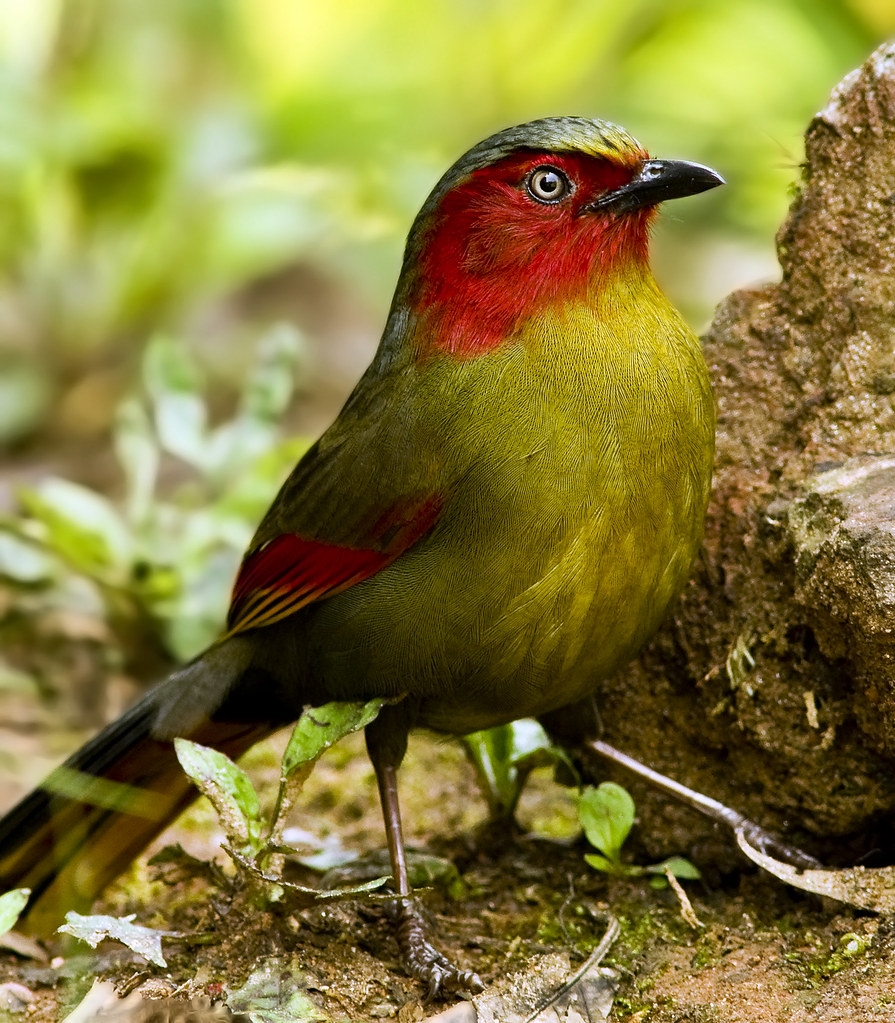
Nepal’s Extinct Bird Spotted After Disappearing for 178 Years

http://orientalbirdimages.org/images/data/30910_1398534777722_1662845773_908863_6374295_n.jpg 


The red-faced liocichla (Liocichla phoenicea) hasn’t been spotted for 178 years and was thought to be locally extinct, according to Australian Geographic. 

They are a group of birds in the genus of the same name, Liocichla, from the Leiothrichidae family. They are found in Asia from India to China. Wikipedia
Scientific name: Liocichla
Higher classification: Leiothrichidae
Rank: Genus   
A group of ornithologists spotted the bird on a 10-day bird watching tour.

https://ecowatch.com/wp-content/uploads/2016/06/red_faced_bird_main_750.jpghttp://d3lp4xedbqa8a5.cloudfront.net/s3/digital-cougar-assets/AusGeo/2016/05/27/62084/Red-faced-Liocichla_TakeninThailand-(Custom)-(1).jpg

https://ecowatch.com/wp-content/uploads/2016/06/red_faced_bird_3_750.jpg
https://c2.staticflickr.com/6/5253/5545600425_ce766f3efc_b.jpg

Reference: 

Australian Geography