Monday, December 5, 2016

World Soil Day 5 December

"On World Soil Day, I call for greater attention to the pressing issues affecting soils, including climate change, antimicrobial resistance, soil-borne diseases, contamination, nutrition and human health." — UN Secretary-General, Ban Ki-moon
 

2016 Theme: “Soils and pulses, a symbiosis for life”


The positive contributions of pulses to soil properties are many: they fix the atmosphere nitrogen and improve its biodiversity, fertility and structure.
That is why the Food and Agriculture Organization (FAO) dedicates this year's World Soil Day to pulses. Also, owing to their nutritional benefits, 2016 was declared the International Year of Pulses.
The campaign aims to connect people with soils and raise awareness on their critical importance in our lives.
Soil is an essential resource and a vital part of the natural environment from which most of the global food is produced.

At the same time, soil provides living space for humans, as well as essential ecosystem services, which are important for water regulation and supply, climate regulation, biodiversity conservation, carbon sequestration and cultural services. But soils are under pressure from increases in population, higher demands for food and competing land uses. Approximately 33% of our global soils are degraded and policy makers around the world are exploring opportunities to embrace sustainable development via the sustainable development goals.

How will you celebrate World Soil Day?
World Soil Day 2016 will be celebrated on the 5th of December at FAO headquarters in Rome, FAO regional offices and through national and local events.
Are you planning to have an event on soils? Put your event on the map


Past Compaigns on Soil Day

Saturday, December 3, 2016

Is the tasmanian tiger or thylacine still exist ?

This is the latest video footage submitted by Thylacine Awareness Group.

The last Tasmanian tiger, or thylacine, is said to have died in 1936 and was declared extinct in 1986. 
The Thylacine Awareness Group claims there have been 5,000 reported sightings of thylacines in the past 80 years.
The last known Tasmanian tiger named "Benjamin" died in the Hobart Zoo in 1936.
This adding fuel to the theory that tasmanian tiger is not extinct, when a women recently witnessed at Aldinga Beach, South Australia. 


Last footage of Tasmanian tiger on September 7, 1936 at Hobart Zoo, Tasmania, Australia
 

Thylacine Awareness Group visited South Australian museum
 

The thylacine, more commonly known as the Tasmanian Tiger, was named for its final habitat though fossil records and cave paintings show it was once common across Australia and also lived in Papua New Guinea.
Despite being called tigers due to the distinctive stripes on their back, thylacine are actually predatory marsupials, very closely related to the Tasmanian Devil.
By the time Europeans arrived in Australia thylacine were already confined to coastal regions and Tasmania, believed to have been out-competed by other species such as dingoes.
Aggressive hunting by the new settlers in order to protect flocks of sheep they brought with them all but wiped the thylacine out, with bounties offered per scalp a hunter could bring back.

Footage Courtesy: Thylacine Awareness Group

Friday, August 5, 2016

Cold Shower and Hot Shower.. What makes difference

Bright Side made their own research and found out the effects of hot water and cold water bath...


Friday, July 1, 2016

Wednesday, June 22, 2016

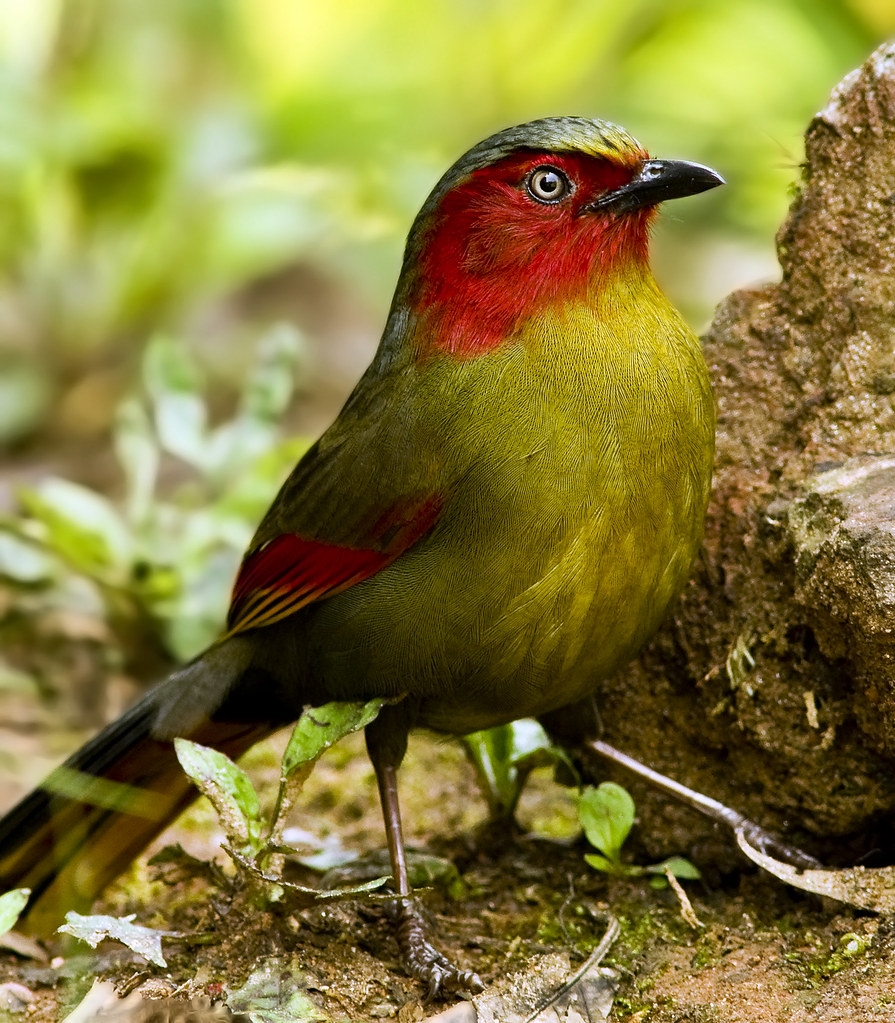
Nepal’s Extinct Bird Spotted After Disappearing for 178 Years

http://orientalbirdimages.org/images/data/30910_1398534777722_1662845773_908863_6374295_n.jpg 


The red-faced liocichla (Liocichla phoenicea) hasn’t been spotted for 178 years and was thought to be locally extinct, according to Australian Geographic. 

They are a group of birds in the genus of the same name, Liocichla, from the Leiothrichidae family. They are found in Asia from India to China. Wikipedia
Scientific name: Liocichla
Higher classification: Leiothrichidae
Rank: Genus   
A group of ornithologists spotted the bird on a 10-day bird watching tour.

https://ecowatch.com/wp-content/uploads/2016/06/red_faced_bird_main_750.jpghttp://d3lp4xedbqa8a5.cloudfront.net/s3/digital-cougar-assets/AusGeo/2016/05/27/62084/Red-faced-Liocichla_TakeninThailand-(Custom)-(1).jpg

https://ecowatch.com/wp-content/uploads/2016/06/red_faced_bird_3_750.jpg
https://c2.staticflickr.com/6/5253/5545600425_ce766f3efc_b.jpg

Reference: 

Australian Geography